Every culture has codified its own objects believed to attract prosperity, but they are not all based on the same symbolic principles. Some good-luck charms derive their meaning from a historical form of currency, others from an animal associated with fertility or a principle of energy flow. Understanding these distinctions makes it easier to choose an object that aligns with the tradition it comes from.
Maneki-neko and feng shui toad: two distinct principles of attraction
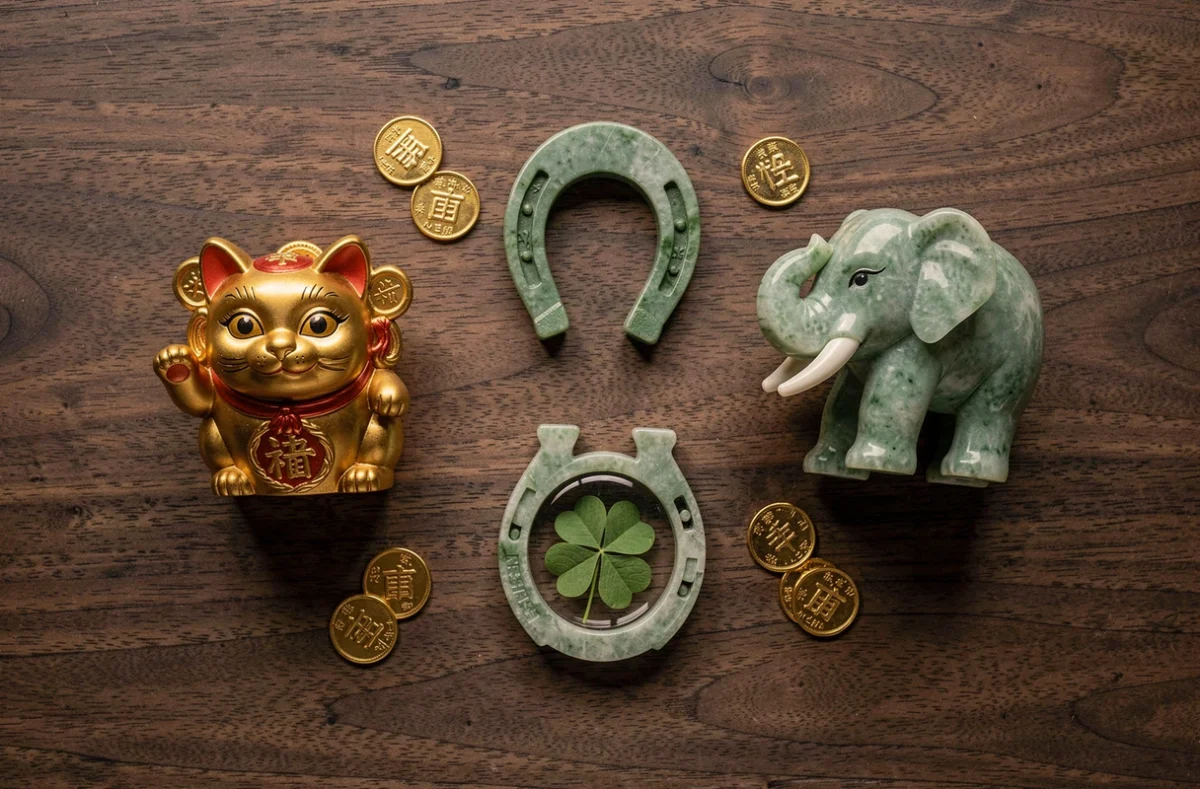
The maneki-neko is a Japanese symbol, not a Chinese one. It dates back to the Edo period, and its international spread accelerated during the Taishō period, when workshops in Seto produced figurines for export. Demand in the United States grew when the First World War disrupted German supplies of decorative objects.
The raised paw distinguishes between two functions. A raised right paw is associated with money and fortune, while the left paw is linked to attracting customers. Color adds another layer to the code: a gold maneki-neko represents wealth, while a white one symbolizes good luck in general. Confusing these attributes means overlooking the system used to interpret this object.
The feng shui toad (Jin Chan) works on a different principle. Depicted sitting on a bed of coins with a coin in its mouth, it is placed facing into the home to symbolize money coming in. If the coin is missing or the animal faces the door, the symbolism is reversed. Choosing a good-luck charm to attract money and wealth means following these placement rules; otherwise, the object loses its function within the feng shui system.
Chinese coins and red knots: the true monetary symbolism behind replicas
The round coins with square holes reproduced in good-luck charms are not merely decorative motifs. They refer to a historical form of currency used during several dynasties. The circle represents heaven, while the square represents earth. This cosmology gives the coin a dual meaning: a medium of exchange and a symbol of universal harmony.
Decorative replicas are not antique coins. Objects sold as good-luck charms are modern reproductions, often tied together with red thread. The Chinese knot that accompanies them adds another layer of symbolism: made from a single thread, it evokes continuity and protection. Red, the dominant color since the Tang dynasty, remains a symbol of happiness in Chinese tradition.
Arranging three coins tied with a red knot is the most common configuration for attracting prosperity. Some feng shui practitioners place them in a wallet, while others put them under the entrance mat or in the southeast sector of a room, the area associated with wealth on the Ba Gua grid.
Horseshoes, four-leaf clovers and ladybugs: objects of protection more than wealth
European tradition associates several objects with good luck, but their connection to money is often indirect. The horseshoe is the best-documented example. In 1696, English antiquarian John Aubrey described the practice of nailing a horseshoe above a door as a way to ward off evil spirits. Its primary purpose is protection, not attraction.
The four-leaf clover works in a similar way: its natural rarity makes it a symbol of good luck, but no established tradition specifically links it to material wealth. In French folklore, a ladybug heralds good weather or good news. These objects belong to a symbolism of protection and good fortune in the broad sense, not to a codified system for attracting money.
Combining these European objects with feng shui elements in the same space has no symbolic coherence. The traditions use different interpretive frameworks and different placement rules.
Feng shui placement of wealth objects: the southeast sector and the flow of chi
In feng shui, an object’s location matters as much as the object itself. The southeast sector of the home corresponds to the wealth area on the Ba Gua grid. Placing a symbol of prosperity in a dark hallway or bathroom compromises the energetic reading of the space.
Basic rules for positioning an object associated with money in this context:
- Place the feng shui toad on the floor, facing inward, never up high or facing a window or exit
- Place Chinese coins tied with a red knot in the southeast sector or in a container associated with finances (cash drawer, wallet)
- Place the Pixiu, a mythical guardian of wealth in Chinese tradition, facing the front door to capture incoming chi
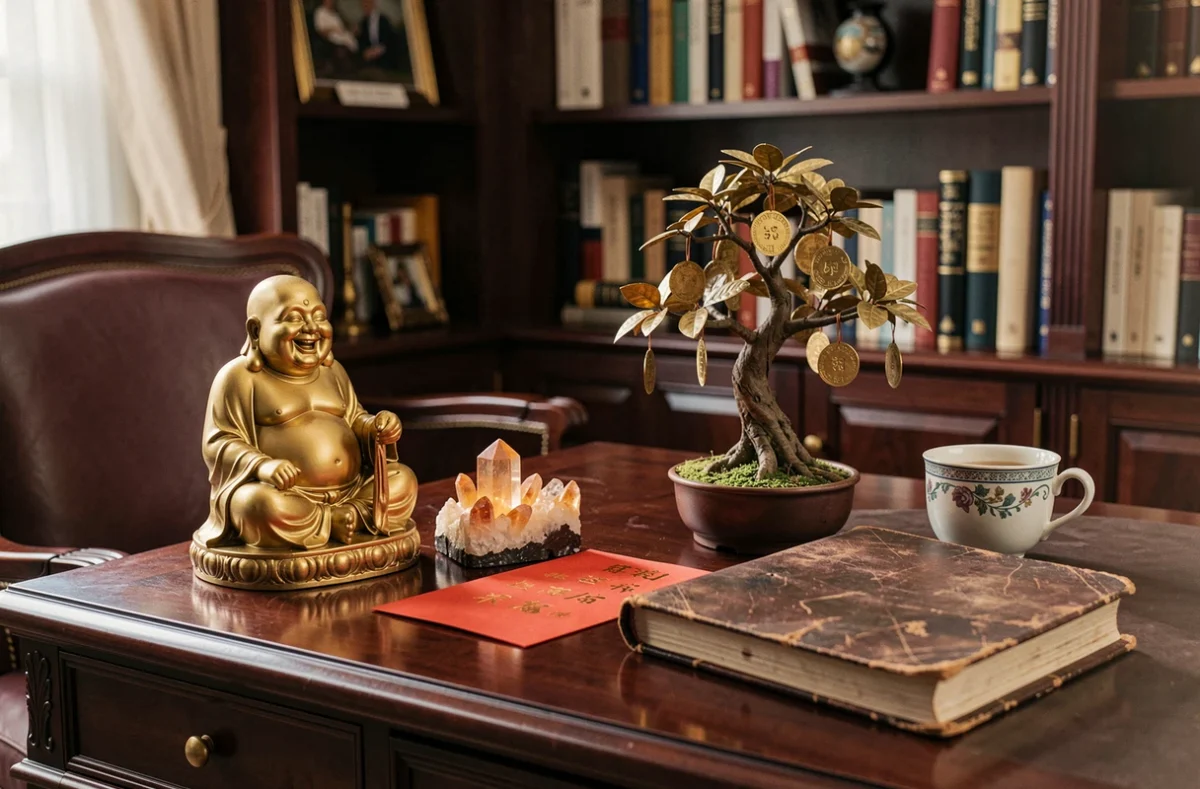
A golden laughing Buddha (Budai), often mistaken for Gautama Buddha, is another symbol of abundance. Place it in the entryway or living room, never on the floor or in a bedroom. The statue serves as a symbol of welcome and joy, both of which are associated with prosperity in Chinese symbolism.
Good-luck bracelets and jewelry: portable feng shui or simply an accessory
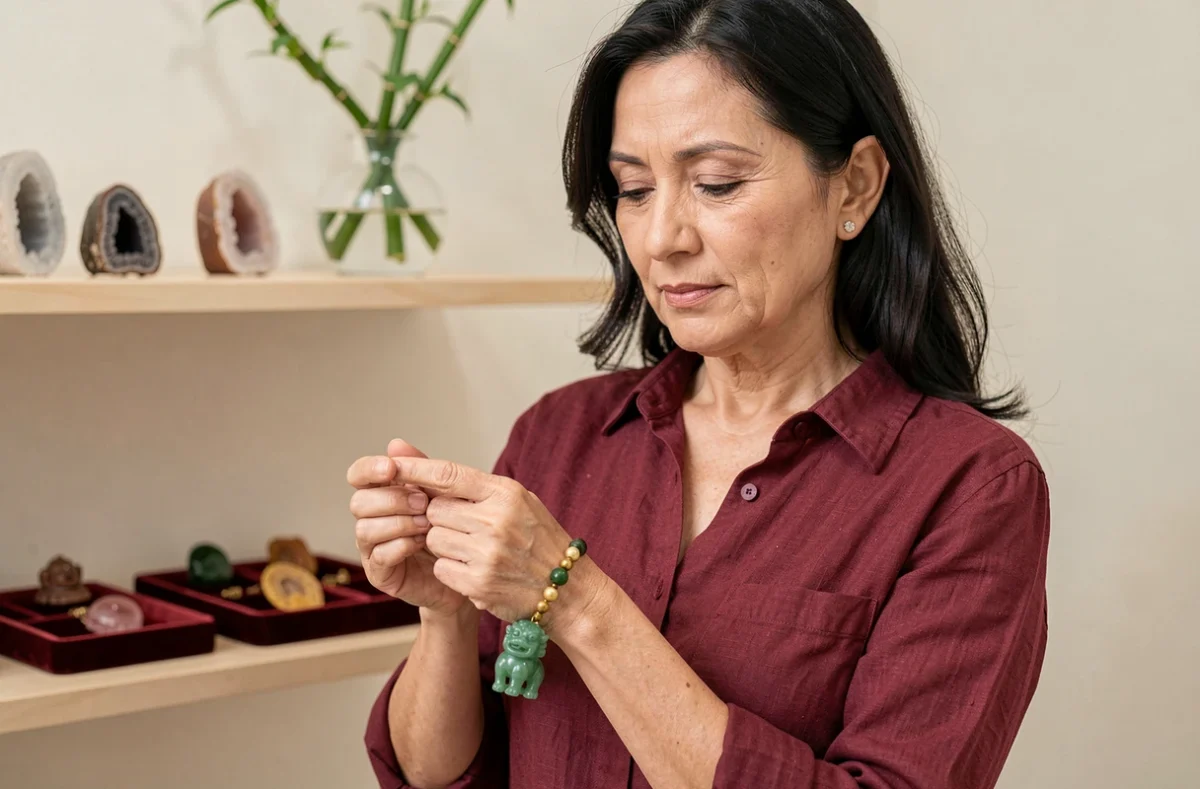
Black obsidian bracelets engraved with a Pixiu have become some of the most widely marketed objects in the feng shui category. According to tradition, the bracelet should be worn on the left hand to receive energy, while the right hand is the one that releases it.
The stone also plays a role in the symbolic system. Obsidian is associated with protection, citrine with abundance, and tiger’s eye with confidence in financial decisions. A bracelet combining Pixiu and citrine is therefore specifically intended to attract wealth within this framework.
The actual effectiveness of this jewelry has not been documented in scientific studies. Its value lies in the coherence of the symbolic system it belongs to and the intention its wearer invests in it. A feng shui bracelet worn without understanding its codes remains a decorative accessory.
Good-luck objects associated with money do not work as universal amulets. Each belongs to a specific cultural system, with its own rules for making, placement and interpretation. Putting a feng shui toad and a four-leaf clover on the same shelf means layering two languages that do not speak to each other. Symbolic coherence remains the only criterion that distinguishes a meaningful object from a trinket.