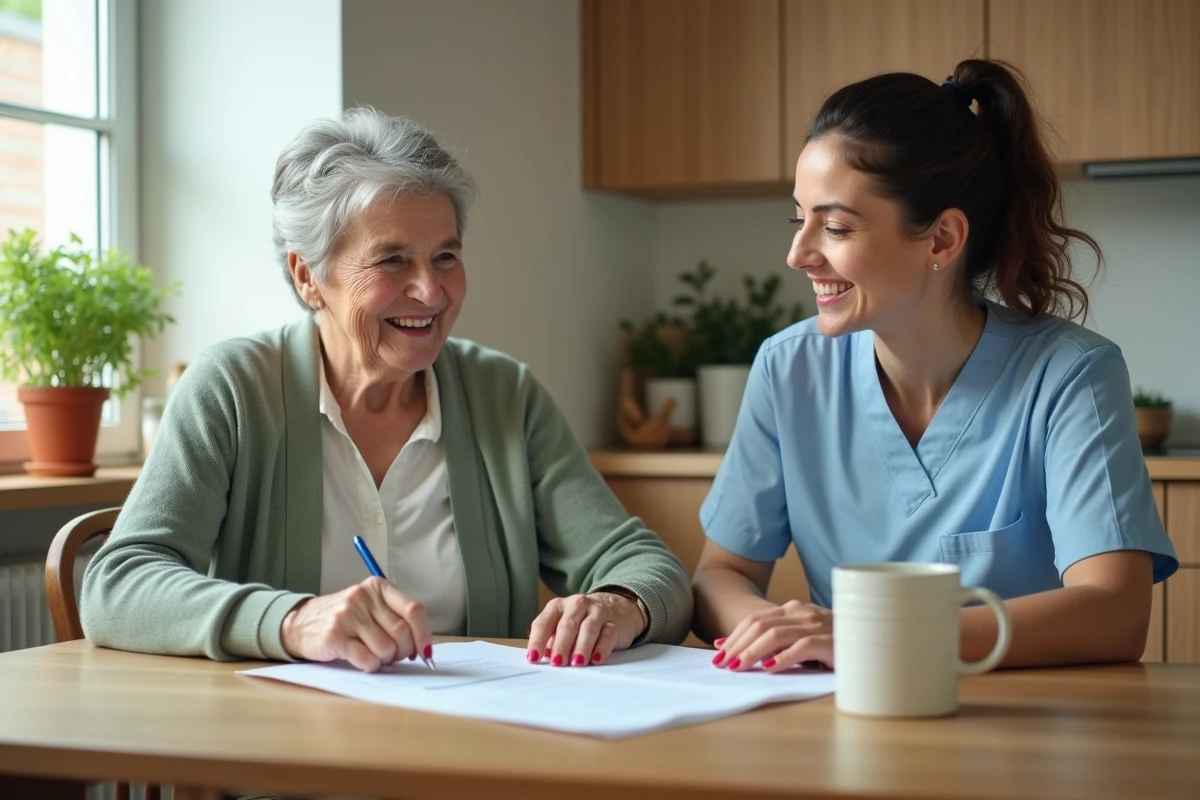
When looking for support for an elderly parent, the main difficulty is understanding how the various services fit together in a coherent pathway. The service offerings for seniors in France often remain fragmented, with each organization providing its own list of tasks without showing the overall logic.
AGGIR Grid and Senior Support Pathways: The Foundation That Few Providers Explain
The assessment of loss of autonomy in France is based on the AGGIR grid, which classifies individuals into six groups (GIR 1 to GIR 6). This classification determines not only eligibility for the APA (personalized autonomy allowance) but also the volume and nature of the available assistance.
Most home care providers present their services in a catalog format: assistance with getting up, bathing, meal preparation, shopping. This breakdown obscures a central issue: support must evolve with the level of dependency. A person classified as GIR 4 today may shift to GIR 3 in the following months, which alters the aid plan, funding, and necessary caregivers.
The logic of an individualized pathway combines home care, temporary accommodation solutions, day care, and housing adaptation. It relies on coordination between the primary care physician, the CLIC (local information and coordination center), the CCAS, and the departmental council. Among the organizations that integrate this approach, the services offered by Green Seniors fit into this logic of comprehensive support rather than merely providing hourly services.

Comparison of Support Systems: Home Care, Temporary Accommodation, and Shared Housing
To assess the relevance of support, it is necessary to compare the available systems according to their function in the senior’s pathway. The table below summarizes the main options and their roles.
| System | Target Audience | Main Function | Possible Funding |
|---|---|---|---|
| Classic Home Care | GIR 4 to GIR 6 | Daily assistance (meals, shopping, cleaning) | APA, retirement fund aids |
| Home Nursing Care | GIR 1 to GIR 4 | Medical and paramedical care | Health insurance |
| Temporary Accommodation | All GIR | Respite for caregivers, post-hospitalization transition | APA, departmental social aid |
| Day Care | GIR 2 to GIR 5 | Cognitive stimulation, social connection | APA, complementary aids |
| Shared Housing / Autonomous Residence | GIR 5 to GIR 6 | Adapted housing with collective services | APL, ALS, Anah aids |
| Housing Adaptation | All GIR | Fall prevention, accessibility | Anah aids, retirement funds |
What distinguishes tailored support from standard services is the ability to combine several of these systems according to the evolution of the situation. A senior almost never fits neatly into a single box of this table.
Support for Family Caregivers: A Key Dimension of Senior Support
The content from major providers focuses on the direct beneficiary. Family caregivers, however, remain in the blind spot. Recent data, however, show a rise in respite and psychological support systems integrated into the support offering.
Respite for caregivers takes several forms:
- Temporary accommodation for the dependent relative, allowing the caregiver to take a break for a few days to a few weeks, partially funded by the APA
- Home relief, where a caregiver replaces the primary caregiver during their usual assistance hours (nights, weekends, vacations)
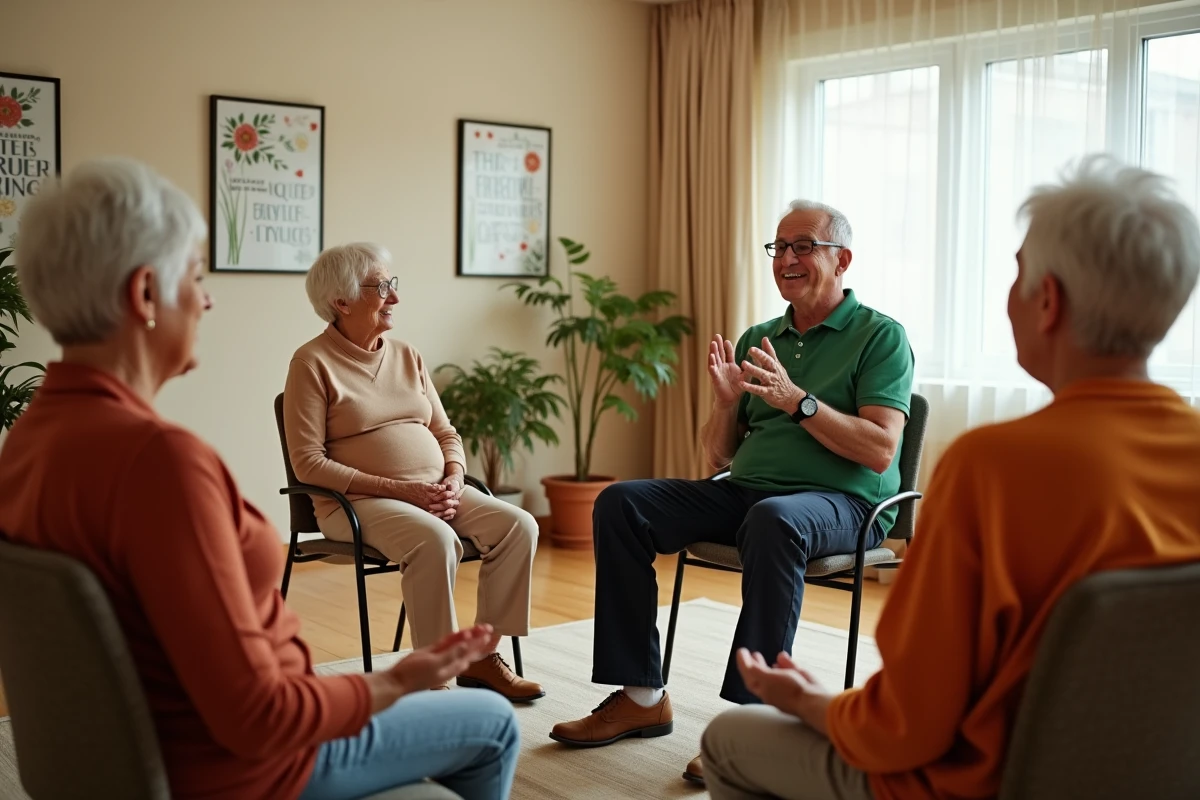
- Psychological support or support groups aimed at preventing caregiver burnout and maintaining the quality of the relationship with the dependent
Caregiver burnout is the leading cause of unplanned institutional placement. Integrating support for caregivers into the support pathway is not an extra: it is a condition for the long-term viability of home care.
Coordination of Financial Aid for Home Care
Funding for comprehensive support mobilizes several sources. The APA covers part of the home care hours based on the GIR and the beneficiary’s resources. Anah aids finance housing adaptation (accessible shower, ramps, stair lifts). Retirement funds offer complementary aids for still autonomous seniors (GIR 5 and 6), often unknown.
The challenge lies in coordinating these funding sources. Each aid has its eligibility criteria, limits, and processing times. Tailored support thus requires administrative coordination between different funders, which few organizations proactively ensure.
- The APA is paid by the departmental council after a home assessment by a medico-social team
- Anah aids require a technical file with a craftsman’s quote and prior approval
- Aids from retirement funds (CARSAT, MSA, etc.) are requested directly from the fund to which the retiree belongs, with separate forms
- The tax credit for home employment covers half of the incurred expenses, within the limits of current caps
A well-structured pathway anticipates these processes in advance. The initial assessment of the level of dependency, coupled with a review of resources and rights, allows for dimensioning the aid plan before the situation deteriorates.
Adapting Senior Housing: A Technical Component of Home Care
Housing adaptation remains the neglected aspect of support. The majority of falls at home occur in the bathroom and on stairs. Replacing a bathtub with a walk-in shower, installing grab bars, or laying non-slip flooring are interventions that have a direct impact on autonomy.
These works are integrated into the overall pathway when they are planned in advance, at the time of assessment. Carrying them out after an initial fall often means acting in urgency with a constrained budget and a beneficiary already weakened.
Home care is not just about hours of intervention. It is a combination of human, technical, and financial services whose coherence determines the duration and quality of life at home. Organizations that take on this coordination role, rather than limiting themselves to a catalog of services, meet a need that demographic aging makes increasingly pressing each year.