
Rice water refers to the liquid obtained after cooking or rinsing rice, rich in residual starch and water-soluble micronutrients. Used for centuries in Asia for its digestive properties, it is gaining increasing interest among athletes looking for a natural recovery drink that is easy to prepare and economical.
Nutritional composition of rice water after cooking
Rice water derives most of its properties from the starch released by the grains during cooking. This starch, partially degraded by heat, remains suspended in the liquid in a form that the body quickly absorbs.
It also contains traces of B vitamins, zinc, and potassium. These micronutrients diffuse into the cooking water, but their concentration remains low compared to a solid food. A bowl of cooked rice provides far more nutrients than the same volume of cooking water.
This nutritional profile explains why rice water does not replace a meal, nor even a formulated recovery drink. It primarily provides simple carbohydrates in liquid form, which may be sufficient in certain specific situations, detailed below. Those who wish to delve deeper into the topic can drink rice water on Fiteo to find a comprehensive file on this drink and its sports uses.
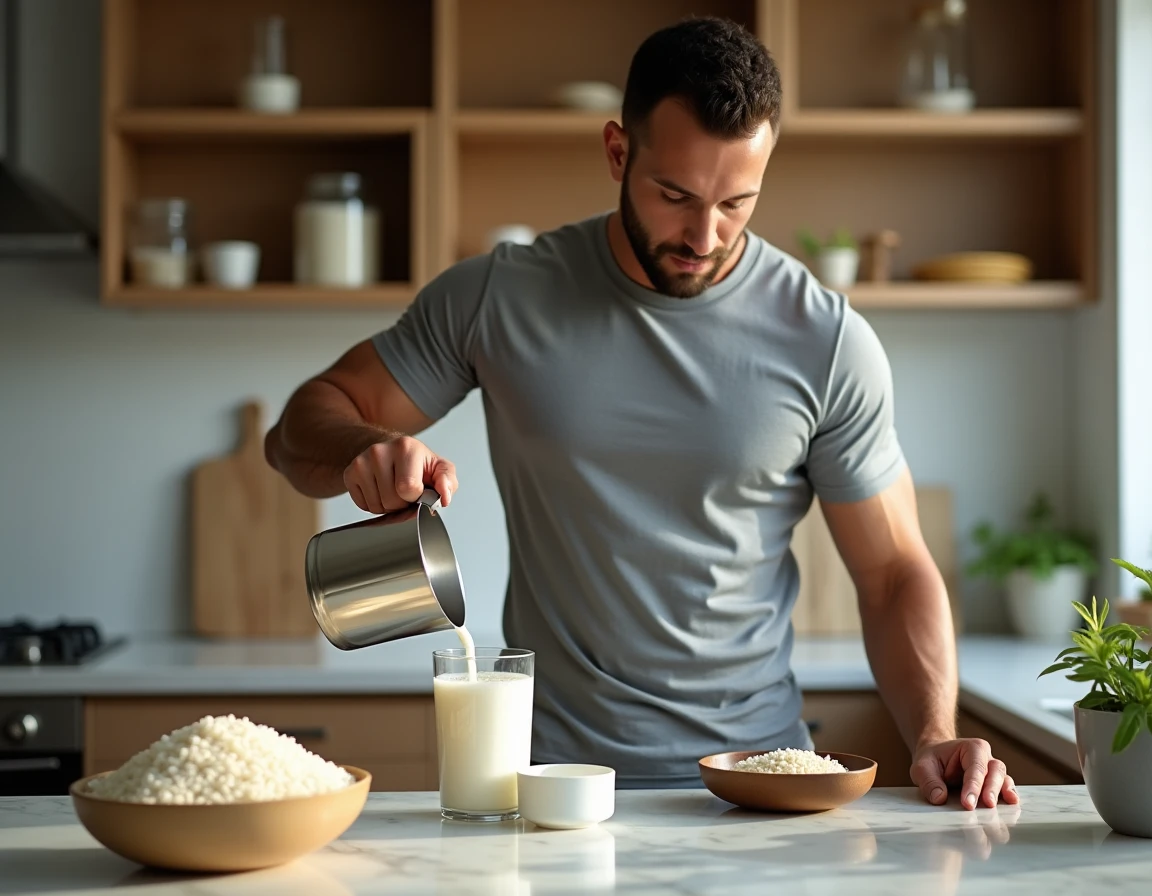
Digestive tolerance after exertion: the true advantage of rice water
After intense exercise, the stomach and intestines are often put to the test. Blood flow, redirected to the muscles during exertion, takes time to return to the digestive system. The result: nausea, bloating, or abdominal cramps when the athlete tries to eat too quickly or too richly.
Rice water has the advantage of being almost devoid of fiber and fat. This lightness makes it easy to tolerate even when the stomach is still fragile. For long-distance runners, cyclists, or endurance athletes who struggle to eat within half an hour after stopping exertion, it offers an initial carbohydrate intake without irritating the digestive mucosa.
The absence of gluten is another advantage for athletes who have a sensitivity to wheat or oats. Rice is one of the least allergenic cereals, and its cooking water retains this property.
Comparison with other post-exercise drinks
A complete recovery drink provides carbohydrates, proteins, and electrolytes (sodium, potassium). Rice water only checks some of these boxes.
- It provides carbohydrates in the form of soluble starch, useful for initiating the reconstitution of muscle glycogen.
- It does not contain significant amounts of protein, which limits its role in repairing muscle fibers damaged by exercise.
- Its sodium content is negligible, while sweating leads to significant losses of this mineral during prolonged exertion.
Rice water is not a complete recovery drink. It rather serves as a digestive bridge while waiting for a balanced solid meal, rich in proteins and minerals.
Rice water and muscle glycogen replenishment
Glycogen is the carbohydrate reserve stored in the muscles and liver. After endurance exercise or a prolonged strength training session, these reserves are partially depleted. Quickly replenishing them accelerates recovery and better prepares for the next session.
The starch dissolved in rice water provides carbohydrates with a relatively high glycemic index, which promotes a rapid increase in blood glucose levels. This characteristic is interesting in the post-exercise window, when muscles absorb glucose with increased efficiency.
The limit remains quantitative. A glass of rice water contains far fewer carbohydrates than a serving of cooked rice or reconstituted rice cream. For an athlete who needs a substantial carbohydrate intake after prolonged exertion, rice water alone is not enough. It can serve as an initial gesture, to be followed by a structured meal.

Preparation and consumption timing for athletes
Two methods allow for obtaining rice water suitable for recovery.
- The cooking method: cook the rice in a larger volume of water than normal, then filter the remaining liquid. The result is a whitish, slightly thick liquid, with the starch concentration depending on the water/rice ratio and cooking time.
- The soaking method: leave raw rice in cold water for several hours, then recover the liquid. This version is less concentrated in starch but retains more B vitamins, which are sensitive to heat.
- The fermentation method: let the soaking water sit at room temperature for a day. This process, traditional in Asia, alters the pH of the liquid and may improve the bioavailability of certain nutrients, but scientific data remains limited.
The best time to consume rice water is within thirty minutes after exertion. This window corresponds to the period when muscle sensitivity to glucose is highest. It can be consumed warm or at room temperature, plain or slightly salted to compensate for some sodium losses.
What rice water does not replace
The enthusiasm for natural and anti-waste solutions leads some athletes to consider rice water as an alternative to commercial recovery drinks. This view deserves nuance. Effective recovery relies on three pillars: carbohydrates, proteins, and electrolytes. Rice water only covers the first, and partially at that.
Rice itself, in solid form or as cream, remains a more complete recovery food than its cooking water. Paired with a source of protein (poultry, eggs, legumes), it constitutes a post-exercise meal much more suited to the actual needs of the muscle.
Rice water remains relevant in a specific case: when the stomach refuses any solid food right after exertion. It then allows for providing a minimum of carbohydrates without causing discomfort, while waiting for the digestive system to return to normal functioning. Outside of this window, it is better to prioritize complete meals rather than rely on a liquid with modest nutritional density.