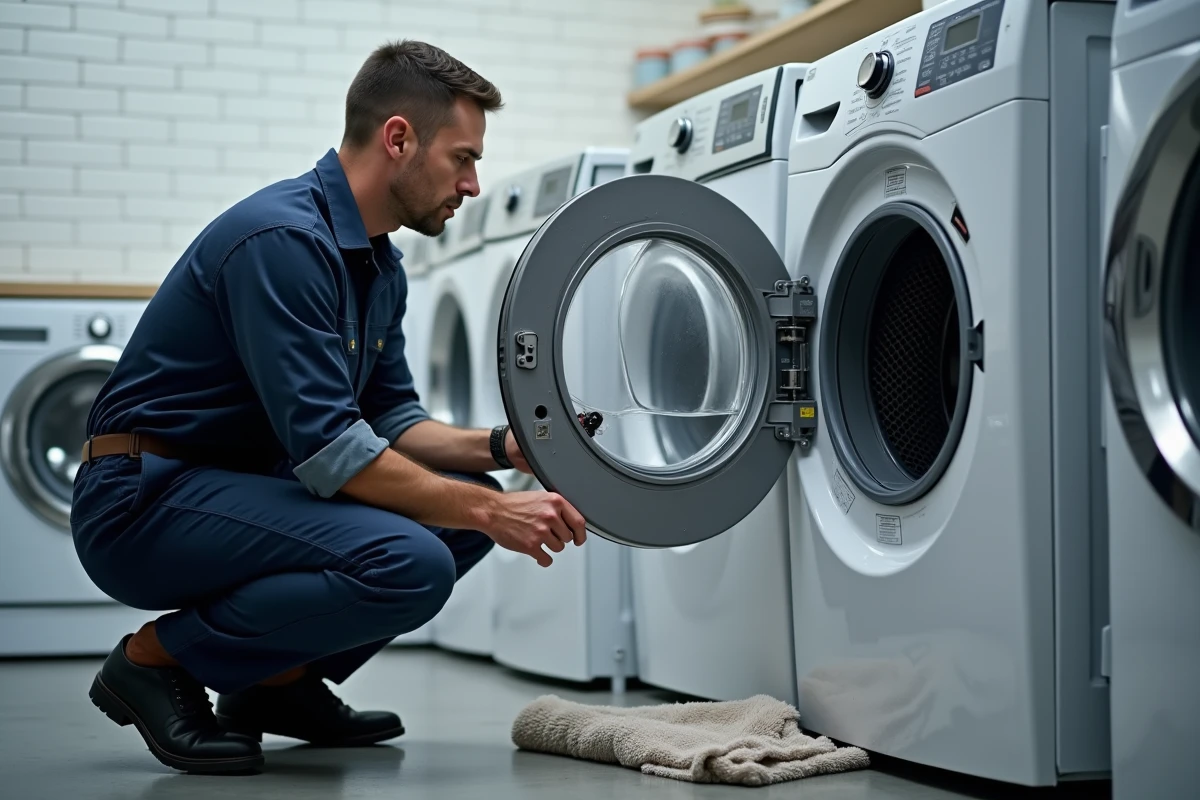
A drying washing machine that finishes its cycle with wet laundry or a puddle on the floor is something we’ve all seen at least once during an installation job. The problem rarely comes from the machine itself, but almost always from the way the water drainage has been designed (or not designed at all). Understanding this circuit helps avoid recurring breakdowns, excessive water consumption, and persistent odors in the drum.
Why the drainage circuit of a drying washing machine differs from a standard washing machine
In a standard washing machine, dirty water leaves through the drain pump, travels through the drainage hose, and reaches the wall siphon. The circuit is used for just a few minutes per cycle. In a washer-dryer, the situation changes.
During the condensation drying phase, the machine circulates hot air in the drum, collects moisture from the laundry, and then condenses it. This condensation water also needs to be drained, which means that the circuit remains active much longer than during washing alone. The tub, hoses, and pump stay warm and humid throughout the drying process.
This prolonged operation encourages the formation of biofilm and deposits in the ducts. According to feedback from specialized repair technicians reported by Murfy, washer-dryers are significantly more prone to bad odors and clogging than standard washing machines, precisely because of this increased use of the drainage circuit.
To delve deeper into the detailed functioning of this system, one can consult the drainage of water in a drying washing machine on Bobo Le Brico, which details the different possible configurations depending on the models.
Partial obstruction of the drainage hose: the silent problem that inflates the bill
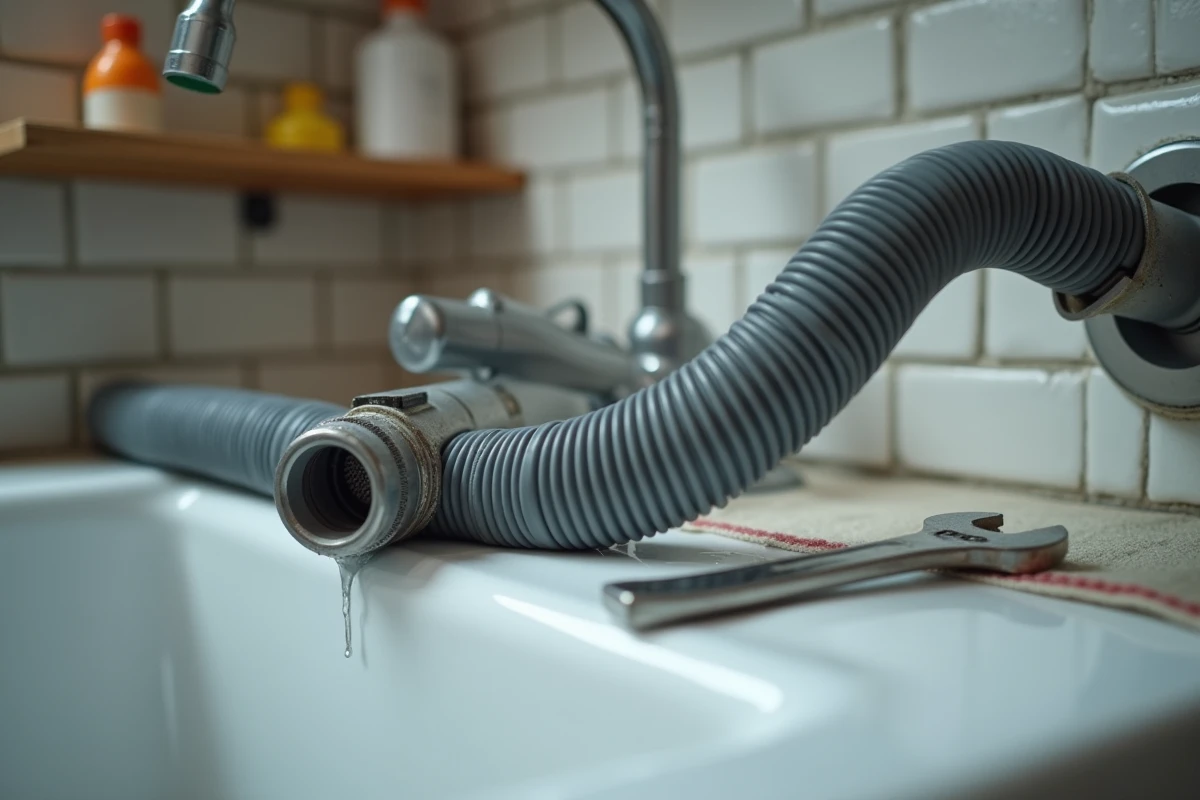
It is often thought that a clogged drainage hose manifests itself with a visible puddle of water. In reality, the most common (and costly) scenario is partial obstruction. Water flows, but slowly.
When the drainage is slowed down, the machine reacts autonomously. It detects that the tub is not emptying at the expected rate and initiates corrective sequences: additional rinsing or spinning phases, an extension of the drying cycle. In condensation mode, thermal exchange becomes less efficient if water stagnates, which causes the machine to consume more water and electricity to compensate.
The concrete result: a cycle advertised at a certain duration and consumption can far exceed these nominal values, without the user realizing it. The only visible alert is sometimes still damp laundry at the end of the program, or an abnormally long cycle time.
The three obstruction zones to check as a priority
- The drain filter, located at the bottom of the front: this is the first retention point for residues (textile fibers, coins, small objects). Monthly cleaning prevents most blockages.
- The drainage hose between the machine and the wall siphon: a too-tight bend, a hose crushed against the wall, or a buildup of limescale gradually reduces the flow. Check that it is neither bent nor pushed too deeply into the siphon.
- The wall siphon or the connection to the general drainage: detergent, fabric softener, and fiber deposits accumulate at this junction point. A semi-annual disassembly and rinsing are sufficient in most cases.
Height of the hose and siphoning: the most common installation error
During installation, the height at which the drainage hose connects to the wall determines the proper functioning of the drainage. If it is too low, water flows back into the tub due to siphoning. If it is too high, the pump is forced and wears out prematurely.
Manufacturer instructions generally specify a height range for the hose bend (the U-shaped part that prevents water return). Respecting this prescribed height avoids backflow and protects the drain pump. In practice, it is often observed that many apartment installations ignore this guideline, either because the wall drainage is poorly positioned or because the hose has been shortened or lengthened without caution.
Concrete case: installation in the kitchen without dedicated drainage
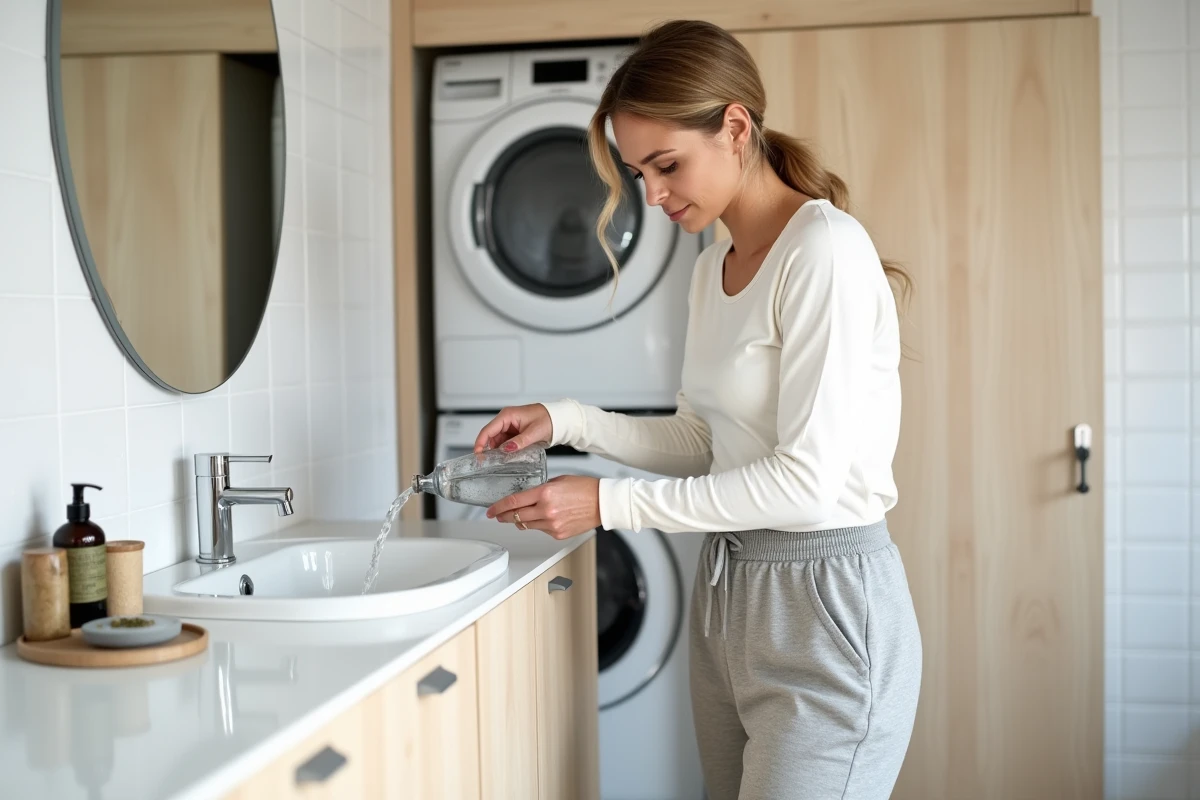
When installing a drying washing machine under a kitchen countertop with a connection to the sink siphon, the configuration often requires a longer hose than expected. Two points to monitor in this case: the total length of the hose (which should not exceed what the manufacturer recommends) and the absence of low points where water could stagnate.
Feedback varies on this point depending on the brands, but one rule remains constant: the hose must rise before descending towards the drainage, never the reverse. A continuous downward path without an anti-siphon bend guarantees problems in the medium term.
Maintenance of the drainage circuit on a drying washing machine: what changes compared to a standard appliance
On a standard washing machine, cleaning the filter every two months and running a high-temperature cycle occasionally is sufficient. On a drying washing machine, the drainage circuit requires more regular attention.
Condensation drying leaves residues that washing alone does not produce: fine fibers from heated laundry, mineral deposits related to evaporation and recondensation of water. These residues accumulate in the pump, internal hoses, and condenser.
- Clean the drain filter at least once a month, also checking the turbine of the pump accessible behind the filter.
- Leave the door and detergent drawer open after each cycle to ventilate the tub and limit mold formation, a problem exacerbated by the residual heat from drying.
- Check the drainage hose every six months: disconnect it from the siphon, rinse it with clear water, and check for any deposits or internal narrowing.
- On models equipped with a condensate water recovery tank (an alternative to direct drainage), empty this tank after each use of the drying mode to avoid any overflow.
A well-maintained drainage circuit on a washer-dryer not only prolongs the lifespan of the appliance. It keeps water and energy consumption close to the values announced by the manufacturer, which makes a real difference on the bill when using the drying mode several times a week.